
 Dharmendra Kumar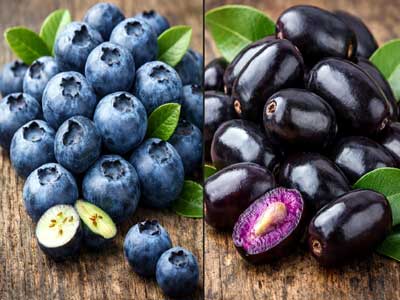
Blueberries and jamun often get confused because they both wear that deep purple coat, but they’re worlds apart once you look closer.
Blueberries are North American natives—tiny, round, and sweet with just a hint of tartness. They’ve earned the ‘superfood’ tag thanks to their antioxidants, especially anthocyanins, which are linked to brain health, heart protection, and even better insulin sensitivity.
Read in Hindi: ब्लूबेरी बनाम जामुन : दो बैंगनी फलों की कहानी...
Jamun, on the other hand, is very much an Indian classic. Oval-shaped, darker in tone, and with that unmistakable sweet‑sour‑astringent punch that leaves your tongue stained purple. It’s been part of Ayurveda for centuries, especially valued for managing diabetes. Nutritionally, Jamun packs more Vitamin C and iron compared to blueberries, while blueberries win on fibre and Vitamin K.
Think of blueberries as the polished global export—available year‑round, often pricey in India—while Jamun is the seasonal local hero, affordable, refreshing, and deeply rooted in tradition.
Overall, both fruits are healthy, but they serve different cultural and nutritional roles: blueberries as a modern wellness staple, jamun as a time‑tested immunity booster and digestive aid.
Related Items
Indian Makhana, Traditional Crop to Global Superfood…
‘Food made from the heart fills the soul’
How to prepare Puffed Rice Bhel with seasonal fruits